A very convenient feature of DrChrono's patient payment section is the ability to "hold" patient payments, without associating them with a specific patient appointment. This is especially helpful if a patient pre-pays for a service.
Here is a breakdown of how it works. When a patient payment is received and posted, it can be posted to either a previous service/appointment or to the "unallocated" bucket.
Posted to a previous service/appointment | Posted to unallocated for a future service | From the Live Claims Feed | From the Patient Payment section | Refunding an unallocated payment
Posted to a previous service/appointment
The payment can be applied to any outstanding patient responsibility amount by simply pressing on the appointment when entering the payment.
For the example below, a patient payment can be applied to the $100 due for a 1/22/2025 service

Posted to unallocated for a future service/appointment
The payment can be applied to the unallocated section to be held for use on a future service/appointment.

If you post a payment to a specific appointment, it will either zero out the patient responsibility amount or lower the amount due depending on how much is paid.
If you post to the unallocated amount, you will be able to see this amount within the Live Claims Feed for each appointment for as long as there is an unallocated amount. It will be highlighted in green so you can easily identify it.
From the Live Claims Feed (Billing > Live Claims Feed > Patient appointment).
The green highlighted box shows you that the patient has an unallocated payment of $200. This amount has been received, but it has not yet been used as a payment for a specific appointment/service.

If you post a patient payment and attach it to an appointment that does not have charges, the payment will appear as an "unallocated appointment payment". The total paid ($20 in this example) is attached to a specific appointment, and it is included in the patient's unallocated payment amount. As soon as there are charges added to the appointment, the "appt's unallocated payment" will be posted against those charges. The "appt's unallocated payment" box will turn yellow as shown in the picture above.

From the patient payment section (Billing > Patient Payments > Patient Record)
Details regarding a patient's allocated and unallocated amounts can be viewed under the patient payment section.
They will be displayed in this dashboard:

Total Paid - this amount represents the total amount paid by the patient
Allocated Payment (Paid to Appt) - this amount represents any patient payments that have been applied to a specific appointment/service
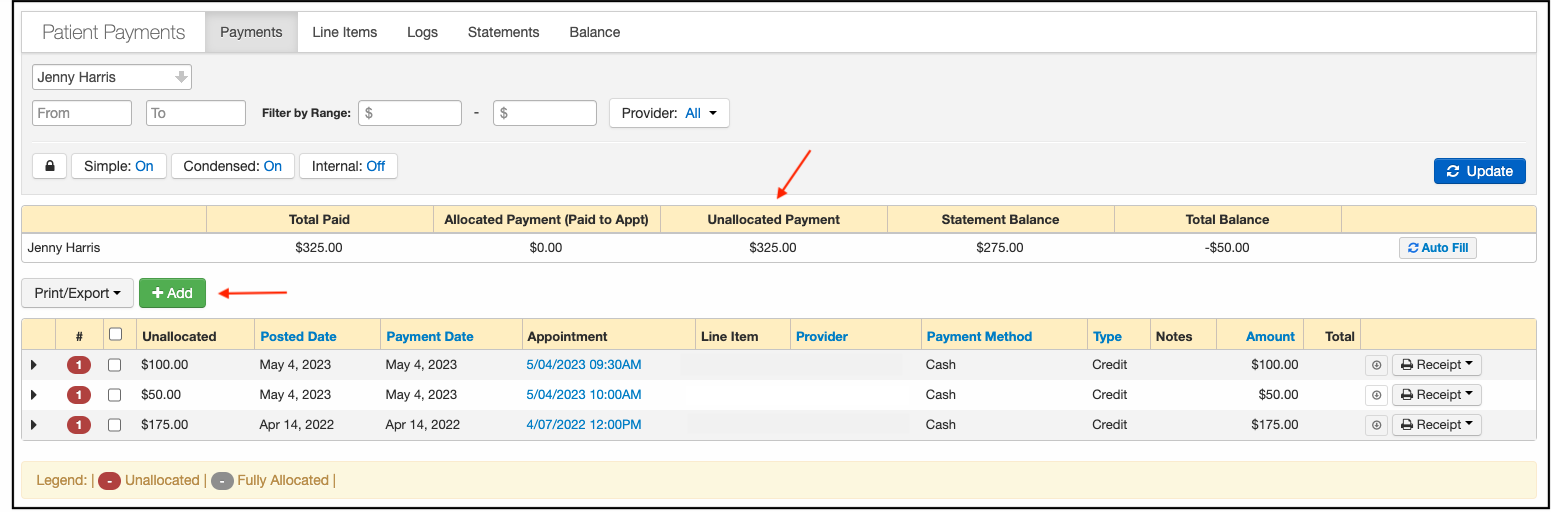
Unallocated Payment - this amount represents any patient payments that have been received but not applied to a specific appointment/service
Statement Balance - this amount is a calculation: Total Patient Responsibility minus any Allocated payments
Total Balance - this amount is a calculation: Total Patient Responsibility minus Total Payments
Refunding an unallocated payment
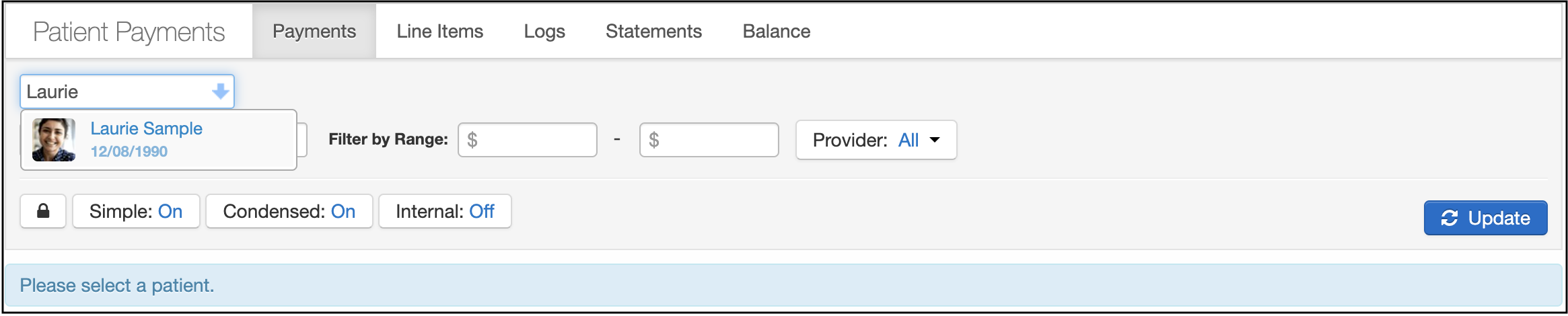
- Navigate to Billing > Patient Payments
- Search for the patient you need to refund the unallocated payment.
- Once you have the patient's payment history, you can view their unallocated balance. Press the green + Add to start the refund process.
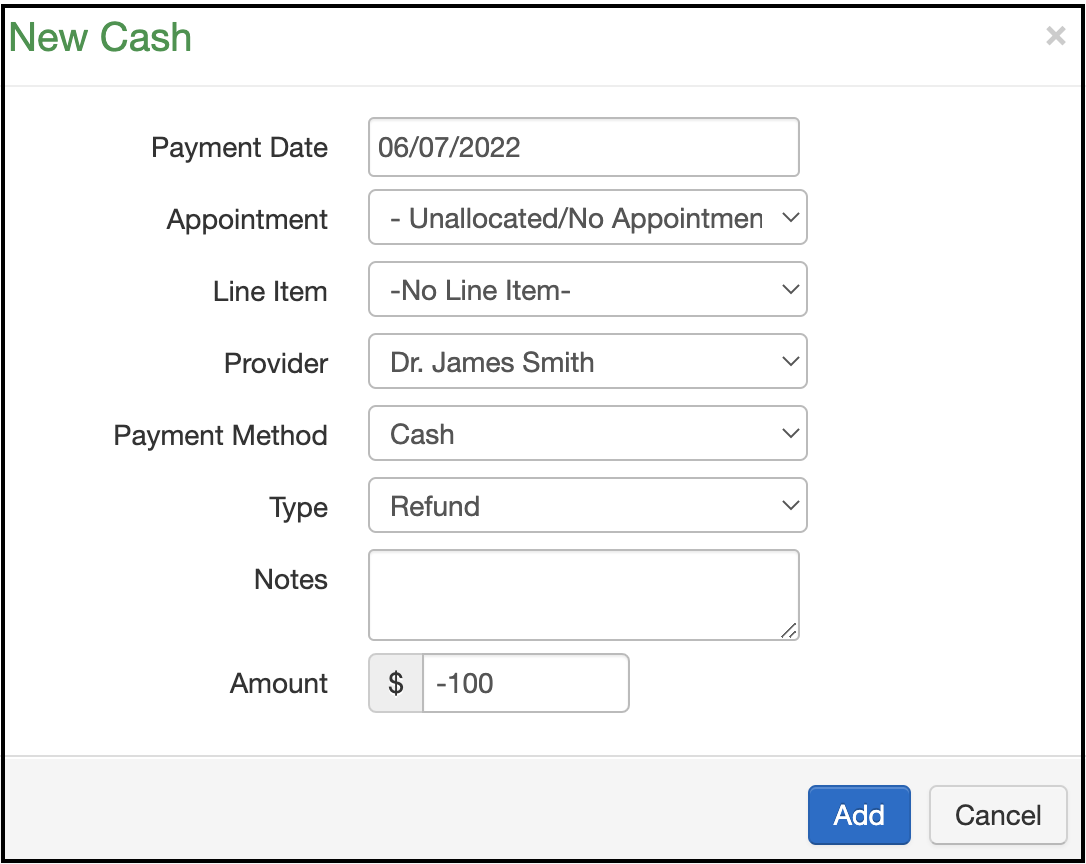
- Select or enter the following:
- Appointment: Unallocated/No Appointment
- Provider
- Payment Method
- Type: Refund
- Notes (Optional, but advised if information on the refund is needed at a later date)
- Amount: The amount needs to be negative.
- Press Add when finished. The unallocated payment is now $0.00.
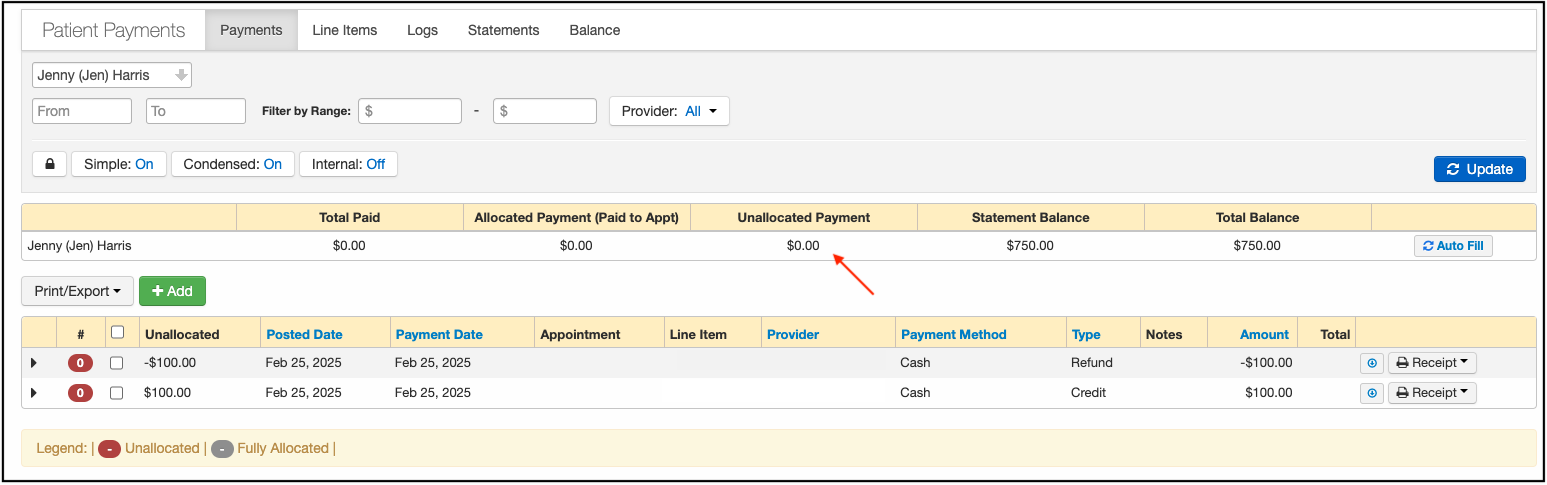
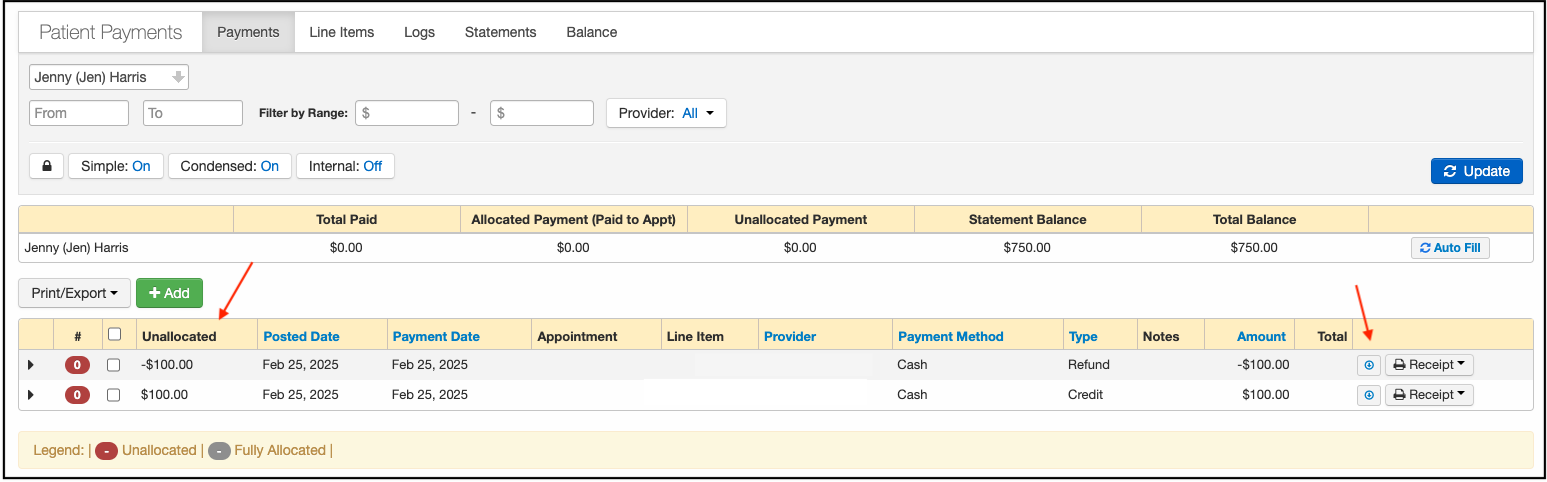
- The next step is to cancel out the positive and negative balances in the unallocated column payments table. If we do not entirely cancel out the balances, they will remain available for future allocations.
- Press the round radio button next to the receipt button.
- Select the appointment, press Move, and then Confirm for each unallocated amount.
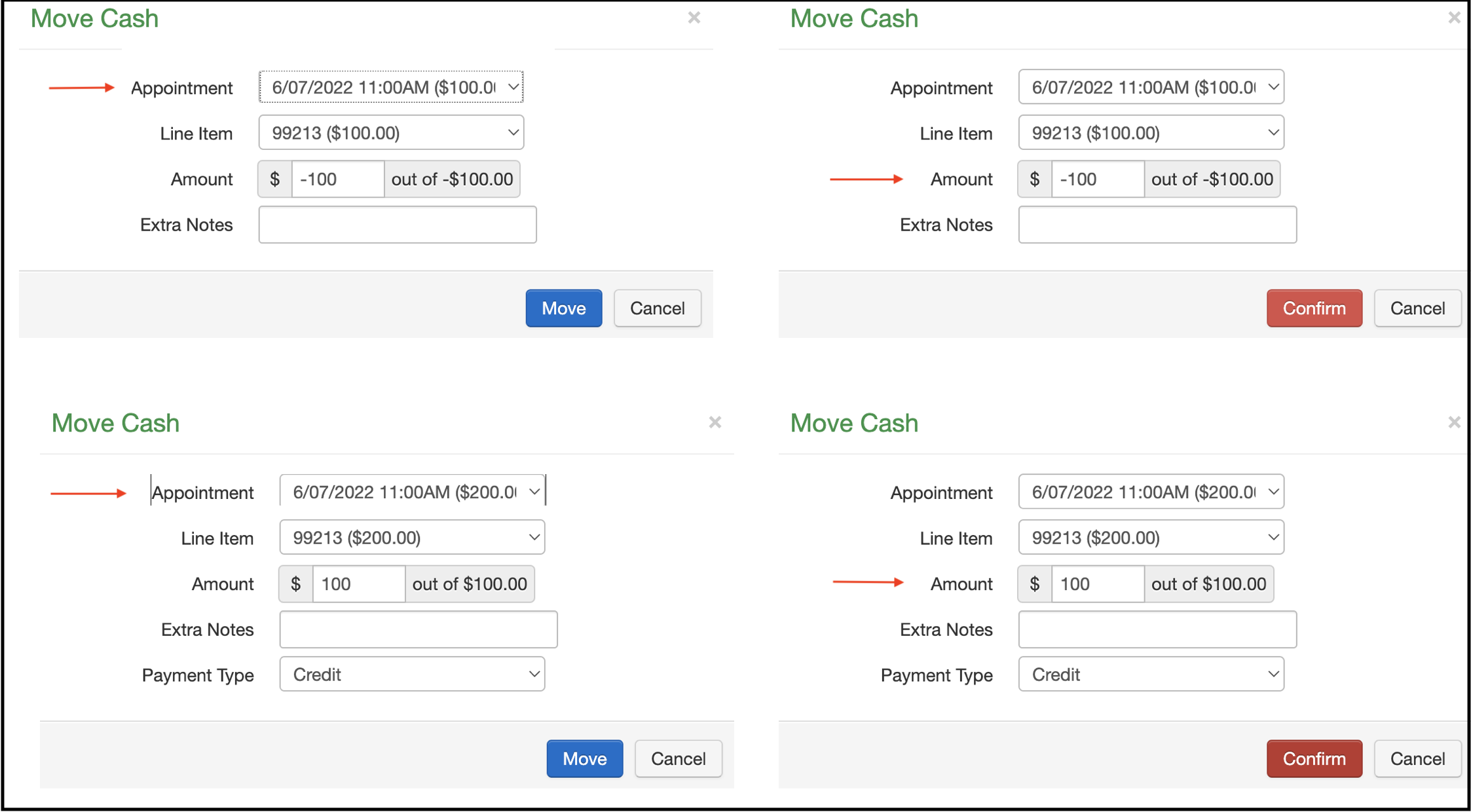
- The unallocated column will now reflect the full refund for the unallocated payment.
